
Running a business is as stressful as it is. That’s not even considering all the tiniest things that could go wrong will almost, always go wrong. Unless you are already meticulously prepared with contingencies planned to counter any such risks.
With risk management, you can overcome whatever threatens your business before it even escalates to something big. So keep your business steady with the best practices that we share with you in this guide.
Here’s what this guide covers:
- How a risk management framework works
- Why risk management even matters
- How you can have these risks mitigated easily and reliably
What a Risk Management Framework Really Does for You
You can have a reputable way to spot upcoming threats, decide what matters in the big picture, and act before damage even takes place. A risk management framework lets you achieve that. So you gain visibility on the issues and work strategically instead of reacting on instinct alone. You are able to see what poses your revenue, people, reputation, or operations a significant risk. With this kind of insight, you prioritize what matters more because not every issue deserves your same level of energy.
Start With Risk Identification That Actually Works
If you want to find out what poses a threat, then first you need to identify said risks. Spot what could go wrong by considering real scenarios relevant to your operations. It could be supplier delays, data leaks, staff turnover, market swings, or compliance gaps.
Good identification is when you pull input from across the business. For example, Finance sees one set of problems, operations sees another, and your frontline teams often notice issues first, long before they show up in reports.
Simply write down what could hurt your goals if it is left unchecked. That list will become the foundation of your risk management framework and keep it grounded in reality.
Assess Risks by Deciding What Deserves Attention Now
Once risks are visible, assess their impact and likelihood by asking yourself these 2 questions: What happens if this occurs? How often could it realistically happen?
You do not need complex scoring models to get value here. A clear ranking already improves decisions. It helps you focus time and resources where they matter most.
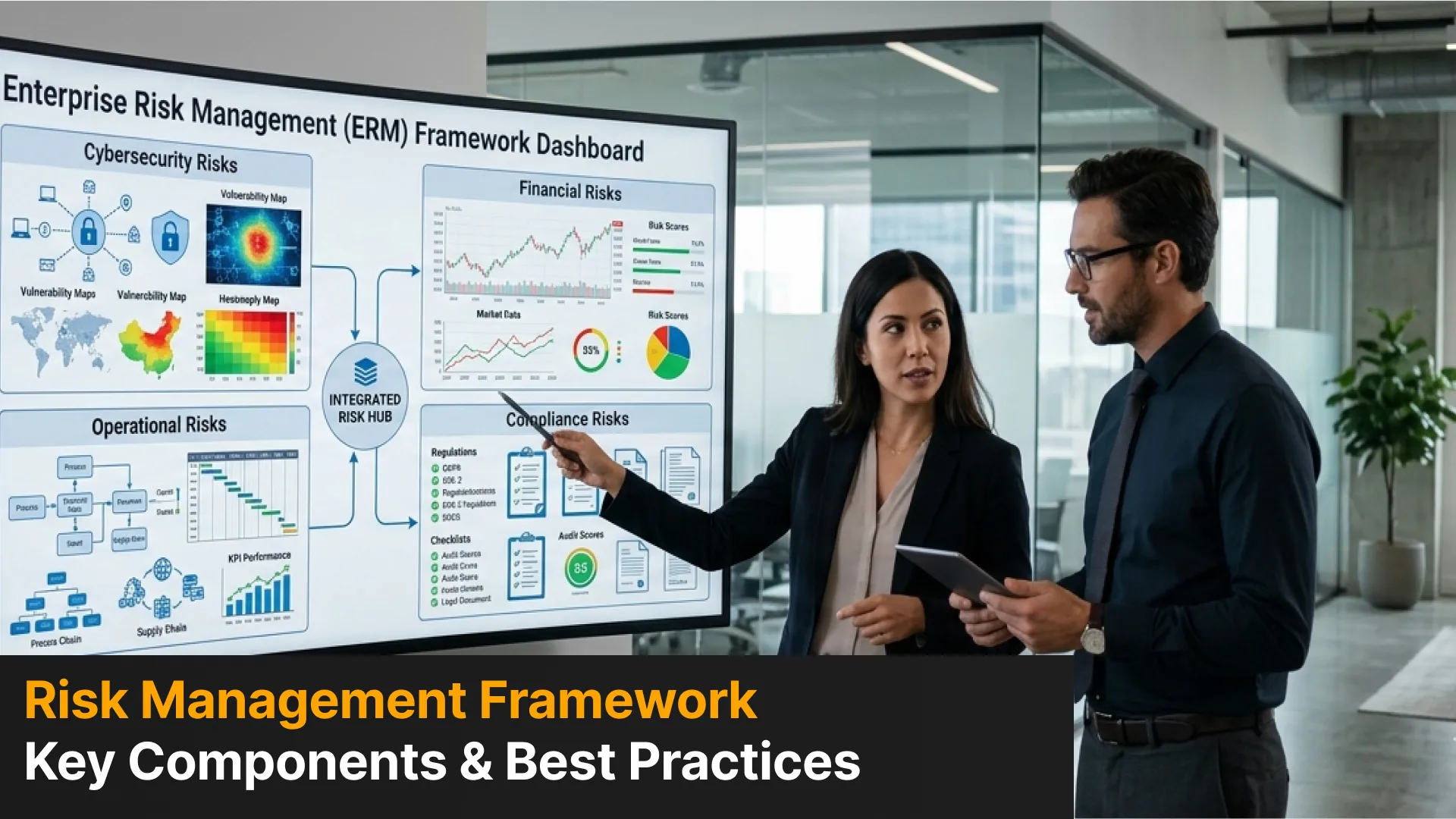
Enterprise risk management connects individual risks to bigger business objectives. When leadership sees how risks tie back to growth or stability, buy-in follows naturally.
Build Responses That Fit Your Business
Every risk needs a response: Sometimes you avoid it while sometimes you reduce it, but sometimes you have to accept it with eyes open.
An example of this is cyber threats pushing you to tighten controls and train your staff. Another example would be market volatility requiring you to diversify your suppliers.
Embed Risk Thinking Into Daily Operations
Plans fail when they only live in drawers. Instead, make them part of how you work and operate. Risk management is efficient when you include it in important decisions that you have to make daily. Project planning, vendor selection, hiring, and expansion are such matters where operational risk management framework would be a near perfect solution.
You connect high-level planning with everyday actions by using this framework. Your teams know what to watch out for and who they should alert when something feels off. Moreover, with quick reviews, you can keep awareness high without slowing work.
Monitor, Review, Repeat
Risks change, markets shift, and regulations update. Your approach needs regular review. Quarterly reviews work well for most businesses.
Revisit your risks, update responses, and retire what no longer applies. This ongoing cycle strengthens your risk management framework over time. It stays relevant because it adapts with you, not against you.
If you want support setting this up or refining what you already have, our risk management consultation services in the UAE help businesses build systems they actually use.
Prepare & Plan for Unexpected Disruptions
Cyber incidents, key supplier failures, public relations issues — some risks happen suddenly. With crisis management, you are prepared for them beforehand. Now preparation doesn’t mean predicting every scenario. What it means is you have defined roles, communication paths, and decision authority ahead of time.
Businesses that plan for crises are able to recover fast. They protect trust with their customers and business partners while retaining control over situations that send others scrambling in panic.
Train People by Turning Awareness into Action
Your people make risk management real. Training helps them recognize warning signs and respond appropriately. This does not require long workshops. Instead, short sessions, clear examples, and simple escalation paths do the job. Over time, risk awareness becomes second nature. When teams feel confident raising concerns, issues surface earlier. That alone reduces damage more than any policy document ever could.
Use Technology as Support
Technology can track risks, automate alerts, and centralize documentation. Used well, it saves time and improves consistency. Used poorly, it becomes another system no one checks.
Choose tools that match your scale and maturity. The best ones support your risk management framework rather than replacing judgment. Human insight still matters.
Why This Matters More in the UAE Market
Regulatory expectations, competitive global market, and operations that span across borders, risk management matters even more in UAE’s market. That’s also how you can grow while retaining control. Plus, a great and clear risk management framework is what supports your confident expansion, smarter partnerships, and stronger governance.
Summing it All Up: Turn Insights Into Your Action Plan
Having all the insights on risks is great. But turning it into a strategic plan is the real deal which takes focus, consistency, and commitment. It requires you to start small, identify your top risks, decide how you want to handle them, and then build from there.
If you want a second set of eyes, our team offers tailored risk management consultation services designed for businesses like yours. We help you move from ideas to action without overwhelming your team. Because the goal is staying steady, informed, and ready for whatever comes next. Contact us now to book your 1:1 consultation session.
FAQs
What is a risk management framework in simple terms?
It is a structured way to identify risks, understand their impact, and decide how to handle them before they disrupt your business.
Why does my business need a risk management framework?
It helps you avoid costly surprises, protect decision making, and stay in control when situations change unexpectedly.
Is a risk management framework only for large enterprises?
No, small and mid-sized businesses benefit just as much because risks hit them harder when there is no plan in place.
How is enterprise risk management different from basic risk management?
Enterprise risk management looks at risks across the entire business and connects them directly to strategic goals.
How often should a risk management framework be reviewed?
Most businesses review it quarterly, or sooner if there are major changes in operations, regulations, or market conditions.
What types of risks should be included in a framework?
Operational, financial, legal, technological, and reputational risks should all be considered based on your business model.
Can a risk management framework support crisis management strategies?
Yes, a risk management framework supports crisis management by providing clarity on roles, actions, and communication when sudden disruptions occur.
Who should be involved in building the risk management framework?
Leadership should guide it but insights from operations, finance, HR, and IT make it far more effective.
Does implementing a risk management framework slow down business decisions?
Quite the contrary! Implementing a risk management framework only speeds decisions up as it removes uncertainty.
Can we outsource risk management consultation in the UAE?
Yes, you can outsource the consultation. Many businesses work with our consultancy for designing and refining a framework that fits their growth plans and UAE’s regulations.